Showing posts with label corporate. Show all posts

Friday, July 11, 2014

On Hobby Lobby, health care, and how working women will win this battle


On June 30, five Supreme Court justices determined that privately-held corporations – which constitute 90% of businesses in the US - can legally force their religious views on their employees, and circumvent federal laws that apply to every person in the United States.

The ruling in the Burwell v. Hobby Lobby Stores, Inc. case. sets a dangerous precedent for any "closely-held corporation" to limit employees' access to healthcare based on an employer’s personally-held, non-medical, ideological beliefs.

Hobby Lobby sued for the right to refuse coverage for IUDs and “morning-after pills” for their female employees.  Company owners believe these medically-safe contraceptives to be "abortifacients;" however, they actually work by preventing ovulation and, therefore, do not inhibit implantation. This medical fact has been confirmed by the American Congress of Obstetricians and Gynecologists, the American Medical Association, the National Institute of Child Health and Human Development, The International Federation of Gynecology and Obstetrics, the National Institutes of Health, the Food and Drug Administration, among others.  The majority of abortion opponents in the medical community have accepted this conclusion.

In 2012, evangelical bioethicist Dennis Sullivan, the Director of Cedarville University's Center for Bioethics in Cedarville, Ohio, reviewed emergency contraceptive research for a peer-reviewed article in “Ethics & Medicine.” He found no evidence that Plan B causes abortions.  "There's no evidence of that effect," he said. "Our claims of conscience should be based on scientific fact, and we should be willing to change our claims if facts change."

Of note: Hobby Lobby has chosen to continue to provide coverage for vasectomies for male employees and, through its 401(k) plan, will continue to invest in the manufacturers of the same birth control it refuses to cover for its female employees.  

This overt sexual discrimination has not gone unnoticed by Congress.  

Senators Patty Murray (D-WA), Barbara A. Mikulski (D-Md.), and Mark Udall (D-CO) have introduced the "Protect Women's Health From Corporate Interference Act" to restore previous contraception-access rules that existed before the Hobby Lobby decision. 

This bill will restore the original legal guarantee that women have access to contraceptive coverage through their work-based insurance plans, and will protect coverage of other health services from employer interference as well. 

This bill also includes the original exemption from the contraceptive coverage requirement for houses of worship, and an accommodation for religious non-profits.  

The bill has been endorsed by the American Congress of Obstetricians and Gynecologists, Asian & Pacific Islander American Health Forum, Association of Reproductive Health Professionals, Black Women's Health Imperative, Colorado Organization for Latina Opportunity and Reproductive Rights (COLOR), Global Justice Institute,  Institute for Science and Human Values, Law Students for Reproductive Justice, Methodist Federation for Social Action, Metropolitan Community Churches, National Council of Jewish Women, National Family Planning & Reproductive Health Association, National Latina Institute for Reproductive Health, National Partnership for Women and Families, National Women's Law Center, People For the American Way, Physicians for Reproductive Health, Population Connection Action Fund, The Center for Women Policy Studies, The United Methodist Church, General Board of Church and Society, The Women's Business Development Center, and Women's Law Project, among others.

Companion legislation will be introduced in the House by Reps. Louise Slaughter (D-NY) and Diana Degette (D-CO), and Rep. Jerry Nadler (D-NY).

In addition, the Senate Judiciary Committee will conduct a hearing on July 15, regarding S.B. 1696, referred to as the “Women’s Health Protection Act.”

When workers pay a premium for workplace-based health insurance, they should receive full coverage.  Preventive health benefits should not been defined by Congress, government bureaucrats, or CEOs - but by medical researchers, doctors, nurses and medical professionals.  

Religious freedom is a founding principle of American liberty – but when this freedom is twisted into something it is not, the results are overt oppression and discrimination, subjugation of the laws of the land, and potential threats to the health and well-being of millions of people.  Citizens must act to restore balance and fairness for those who seek genuine religious freedom, and for those who are at risk of becoming casualties of an erroneous legal precedent.  

-DLH

Tuesday, March 20, 2012

Tax Exemptions Skyrocket on Jindal’s Watch

Photo courtesy of draketoulouse.com
February 19, 2012 by tomaswell

"As incredible as that might sound, consider his (Gov. Bobby Jindal's) veto last year of a 4-cent-a-pack cigarette tax because he didn’t want to impose any new taxes.

Forget for the moment that the cigarette tax was a renewal, not a new tax.

And forget, if you will, that he was not opposed to an increase in college tuition because, in his words, it was not a tax but a fee.

Forget, too, that his veto of the cigarette tax was in effect turning his back on $50 million a year in badly-need revenue—$12 million directly from tax revenue and an additional $38 million in federal matching funds.

And finally, don’t remind him of his bumbling, stumbling, fumbling of two federal grants totaling $140 million. Those included $60 million in funding for early childhood education and $80 million to fund broadband internet connection to 21 rural parishes.

And the reason there is a crisis in the state retirement systems is because the Legislature and Jindal simply reneged on the state’s contribution requirements."

Read the entire article here.

Friday, February 24, 2012

Top 6 Corporations to Occupy

By:  2.22.2012 at 12:13 PM

The Occupy Wall Street movement has permeated across the country – the 99 percent has changed the dialogue of the 2012 election and beyond. As organizers start to regroup and set their sights on the spring, groups in 34 cities have agreed to “a day of nonviolent direct action” on Feb. 29 against corporations they accuse of working against the public interest.

We nominated six we think deserve an Occupation (some are already on an initial target list):

 
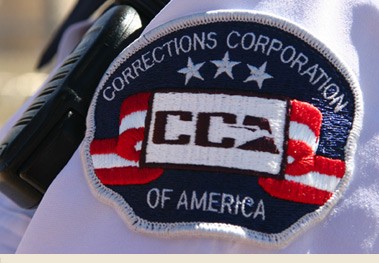
1.    Corrections Corporation of America
Headquarters: Nashville, TN

Profiting off keeping people locked away is certainly a siren call for protesting the practices of Corrections Corporation, the country’s largest for-profit prison company. The corporation has recently sought to purchase prisons in 48 different states. But this offer will do little to lessen the long-term strain on state coffers. Even worse, the corporation stipulates that state prison populations must remain at least 90 percent full – not something any democracy should ever strive to pursue. To complicate matters, Corrections Corporation has deep pockets and uses its considerable might to lobby, finance, and otherwise influence politicians across the country. Corrections Corporation, based in Nashville, manages over 60 facilities in 19 states and D.C.

Meanwhile, the Occupy movement is already starting to join up with prison reformers, who seek to change the conditions that make American prisoners the most abused population in our society. Hundreds of protesters gathered at California’s state-run San Quentin prison this week to demonstrate against high incarceration rates and deplorable living conditions for inmates. Recognizing that prison reformers and Occupiers share similar goals, one Occupier, activist Barbara Becnel, quoted a message she said came from San Quentin death row prisoner Kevin Cooper: “We have merged the prison rights movement with the Occupy movement. The 99 percent has to be concerned about the bottom 1 percent.”

That should go for the bottom 1 percent who are under the jurisdiction of companies like Corrections Corporation.

 
2. Exxon
Headquarters: Irving, TX

ExxonMobil raked in huge profits last year. The oil company’s profits increased by 31 percent in 2011 as compared with 2010. But somehow, this happened while its oil and gas production fell – by 5 percent over that same period. So how does Exxon make more money while producing less oil and gas?

Tax breaks.

Exxon paid an effective tax rate of 17.6 percent, which as the Center for American Progress points out, is 3 percent less than what the average American family paid in taxes. Exxon and other big oil companies don’t pass on the benefits of these tax breaks to consumers. Instead, as CAP writes, “their board members, executives, and shareholders are the ones that profit.”

So how do these oil companies like Exxon get to spend American tax dollars on themselves? By putting even more money into the political system.

Exxon joined four other oil companies in spending $65.7 million on lobbying to retain their tax breaks. For every $1 spent on lobbying, they received $30 in tax breaks, a 3,000 percent return. Additionally, Exxon and its brethren donated over $1.6 million in campaign contributions last year, further securing the policies they like in the future.

Exxon is especially dirty among the Big 5 oil companies. It lobbied for the Keystone XL pipeline and supported climate change denial campaigns, spending $16 million between 1998 and 2005 to such groups. That’s the wrong way to spend taxpayer provided subsidies. All of this is reason enough for some to have already called for an Occupation of Exxon.
 
3. General Electric
Headquarters: Fairfield, CT

GE is one of the world’s largest corporations, with 2010 profits of $14.2 billion ($5.1 billion of which came from U.S. operations). But how much did it pay in taxes that year?

Nothing.

In fact, as the New York Times reports, G.E. claimed a tax benefit of $3.2 billion. Furthermore, from 2008 to 2010, G.E. spent $84 billion lobbying the federal government, joining 30 other major corporations spending more on lobbying than on taxes.

In October, Occupiers recognized the symbolism behind G.E.’s exploitation of the tax system, and set out to demonstrate on CEO Jeff Immelt’s front lawn:
“In the land of the free they tax me but not G.E.!” read the invitation to take an hour bus ride to Immelt’s family home to join the protest, organized by liberal political party Connecticut Working Families. “General Electric made billions last year; they paid no taxes, outsourced thousands of jobs, and got over $3 billion in tax refunds! Join us on a free bus trip to G.E’s CEO’s front lawn to see how our friends in the 1% live.”
Given all that and considering the fact that Immelt serves as chair of President Obama’s Council on Jobs and Competitiveness, even though during his tenure GE has steadily shipped jobs overseas, perhaps it’s time to re-Occupy.

 
4. Monsanto
Headquarters: St. Louis, MO

This giant agricultural biotechnology company is already the focus of activist groups and for good reason. Not only is Monsanto the overwhelming leader in producing genetically engineered seeds used in the United States, it also actively works to squeeze out competitors and control seed prices. The company has also targeted small farmers with ruthless legal battles, essentially forcing them to use Monsanto-branded seeds. Because of these dirty practices, Monsanto was the target of an antitrust investigation last year.

Meanwhile, Monsanto has considerable pull within the U.S. government. Most notably, former Monsanto vice president Michael Tyler is now a senior advisor to the Food and Drug Administration. A petition has circulated recently demanded that the Obama Administration “cease FDA ties to Monsanto”:
“President Obama, I oppose your appointment of Michael Taylor,” the petition on Signon.org reads. “Taylor is the same person who was Food Safety Czar at the FDA when genetically modified organisms were allowed into the U.S. food supply without undergoing a single test to determine their safety or risks. This is a travesty.”
 
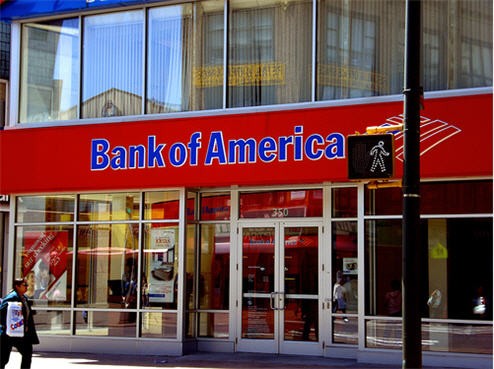
5. Bank of America
Headquarters: Charlotte, NC
“It’s not me, it’s you,” read one. “Just kidding, it’s you.”
“I’m not falling for ‘phase out’ again.”
“Who’s too big to fail?”
“It’s over, BofA.”
These were some of the Valentines sent by Occupiers to Bank of America earlier this month to break up with the bank over its controversial practices seen as unfriendly to consumers, including a recent attempt to impose a $5-a-month debit card fee. It’s too bad the government hasn’t also followed suit. BofA spent $3.2 million lobbying the government last year and about $3 million on campaign contributions in 2008.

Even while he has criticized the bank for the debit card fee and engaged with the bank on mortgage settlement talks, President Obama has decided to accept the Democratic Party’s nomination for president in Bank of America Stadium in Charlotte, NC, in part to sell more skyboxes to moneyed donors.

 
6.    Walmart
Headquarters: Bentonville, Ark.

This one might be a “Duh.” But Walmart is both deserving of an occupation and easy to occupy. Sure, the company’s Arkansas headquarters aren’t exactly easily accessible for Occupiers from across the country.

But Walmart’s thousands of stores nationwide are an easy target for citizens concerned with the company’s standard-setting low wages, labor issues, and steamrolling of local businesses. Moreover, while the corporation had long ago inserted itself in rural America, it now has its sites set on the country’s cities.

Walmart plans to open four stores in Washington, DC, for example, and has its sites set on even more locations.

Occupy has already targeted Walmart, most notably to protest the company’s decision to cut health care benefits for full-time workers and eliminate insurance for new part-time workers. But with Walmart continuing to spend about $7.8 million a year lobbying on issues including taxes and labor, it’s worth a continued Occupation.

Source:  RepublicReport.org